Johannesburg businesses use cars, bakkies, delivery vans and trucks in very different ways. Choosing vehicle branding starts with the type of vehicle, the customer audience and the message that needs to remain readable on the road. A strong design makes the business easy to recognise, uses suitable graphics and adapts to the vehicle’s actual panels.
For a useful result, match the graphic design to the vehicle’s actual bodywork and the way the vehicle is seen in daily business. The planning steps below help you evaluate options and prepare a clear installation brief.
Start with the vehicle’s real job
A company car travelling to meetings may need a restrained logo and contact details, while a delivery van can use larger side graphics and a truck may have broad panels for a prominent identity. Begin with where the vehicle is most often seen: busy roads, customer driveways, loading zones or company premises. That context determines which panels deserve the most attention. Do not design a large promotional image before clarifying what people should know about the business.
Car branding and car wrapping are different options
Car branding includes logos, cut lettering, decals and wider graphic treatments. Wrapping is one of the ways to apply larger vinyl-covered designs. Businesses that need simple identification may prefer clear company graphics on the doors and rear. Those using large-scale campaign imagery may consider more extensive wraps. Review the actual car make, model and body colour before choosing. A design’s clarity matters more than how much area it covers.
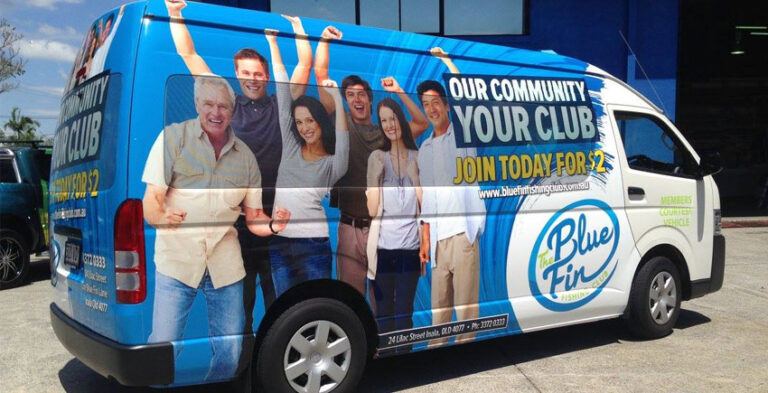
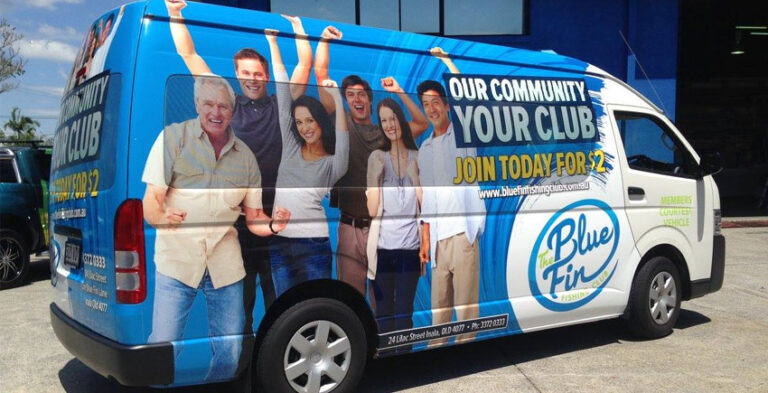
Van graphics support delivery and service operations
Vans offer tall sides and rear doors, but they also introduce door tracks, windows, hinges and body curves. Branding for delivery businesses should make the company recognisable at pickup or drop-off locations. Service businesses may need a short trade description as well as a logo. The message should work whether the van is moving, parked at a client site or standing at a loading area.
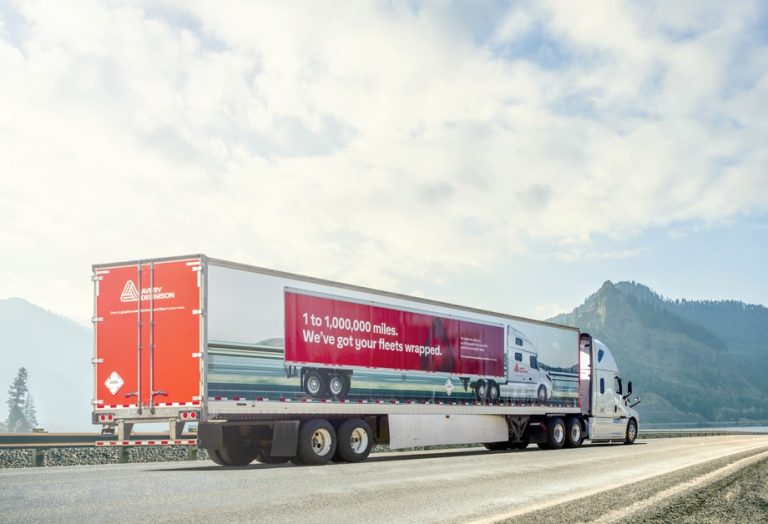
Commercial truck branding needs body-specific planning
A box truck and a small rigid truck have different panel layouts. Large commercial bodies may offer clear areas for the logo, but equipment and safety markings can constrain graphics. Think about whether the body, cab or rear is most visible to the intended audience. Avoid placing important wording on moving components, frequently handled surfaces or areas that must remain accessible.
Johannesburg and Gauteng location considerations
Before arranging graphics, tell Kayma Signs where the vehicle is based in Johannesburg or the wider Gauteng area. Include any access limitations and whether vehicles are used throughout the working day. Installation arrangements should be discussed for the actual location rather than assumed from a general service-area phrase. A local enquiry is most useful when it includes vehicle photographs and the desired installation location.
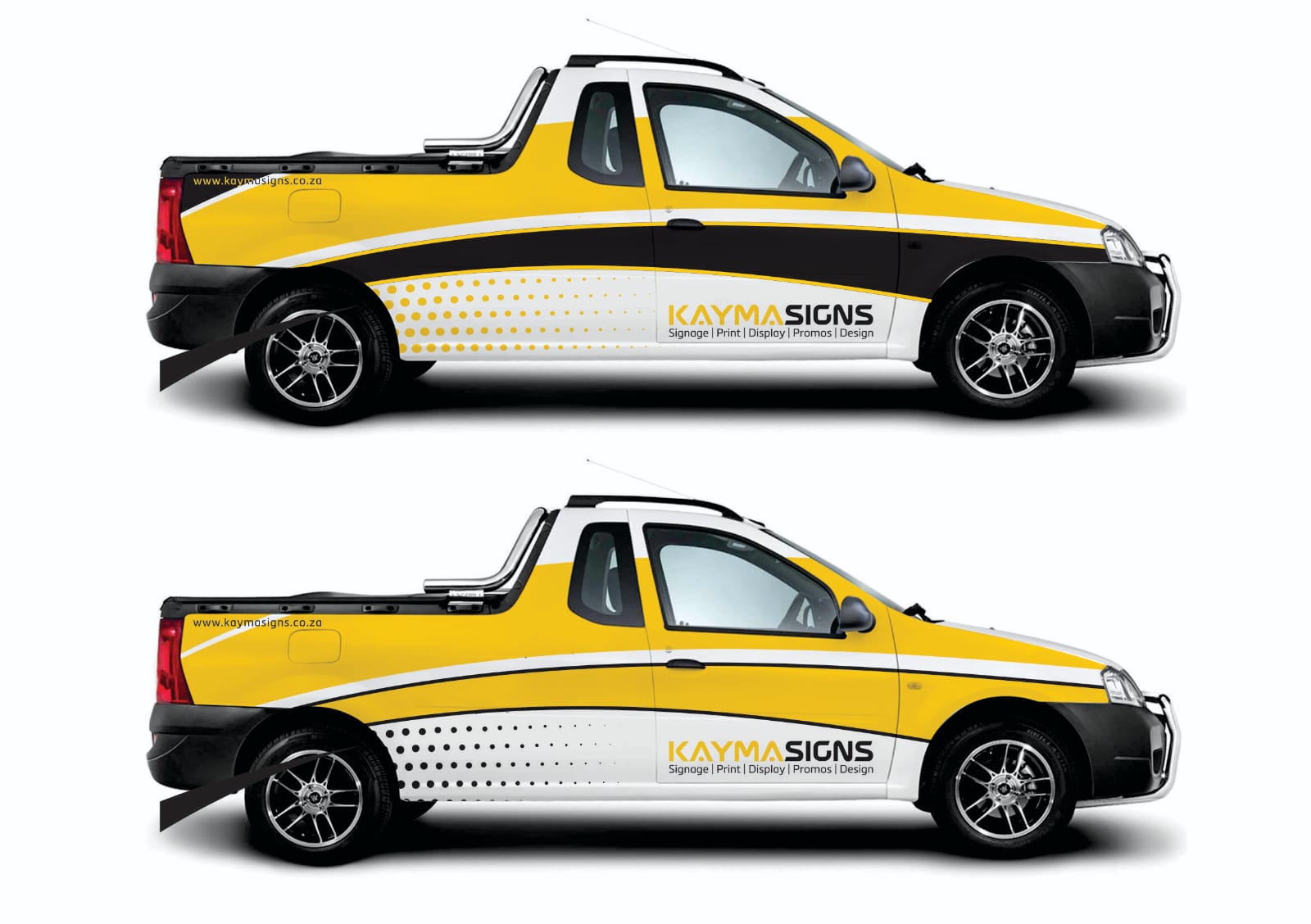
Choose a design people can read
Readability is a design requirement, not an optional finishing detail. Put the company logo and name first, followed by the service category or another concise message. Use contrast between lettering and the body colour. Test proofs at a smaller scale and compare the side and rear views. Avoid tiny promotional text and graphics that become distorted across door joins.
Keep business vehicles consistent as operations grow
If you use several types of vehicles, create a shared visual system before individual installations. Record the official logo, brand colours, typeface and approved text. Adapt layouts to each model while maintaining the same recognisable identity. This is particularly important when adding different vans and trucks to an established fleet.
Practical artwork and vehicle checklist
- Vehicle details: Confirm the make, model, type and approximate surface dimensions.
- Brand files: Gather the approved logo, typography, colours and exact wording.
- Working conditions: Identify where the vehicle is normally parked, driven and loaded.
- Layout: Review both sides and the rear, including door movements and body fittings.
- Readability: Test the company name and service message at reduced viewing size.
- Final proof: Check all wording, registration visibility and other safety features before approval.
Frequently asked questions
What vehicle branding options are available?
Options include vinyl lettering, decals, partial graphics and larger wraps suited to the vehicle and design.
Can a single brand style work on cars and trucks?
Yes, the identity can be consistent, but scale and placement must suit each vehicle.
How do I prepare a Johannesburg vehicle branding enquiry?
Share the vehicle model, photographs, location and the core branding message.
What makes vehicle graphics readable?
Clear contrast, large enough lettering, simple messages and correct placement.
Bring the branding brief together
Professional vehicle graphics should be easy to recognise, visually consistent and practical for the vehicle’s normal duties. Give the designer accurate photographs and brand materials, then confirm each graphic’s placement on the actual bodywork. A clear brief keeps attention on the most useful design decisions.
Explore vehicle branding services, compare car branding, van wraps and truck branding, or send the vehicle details to Kayma Signs.
Real-world design scenarios and practical decisions
Choosing graphics for a Johannesburg trade vehicle
A company that visits customer homes or offices may want the business name and service category visible when the vehicle is parked on a street. Door lettering, rear graphics or a focused partial wrap can help establish that identity. The important message should be readable from ordinary viewing positions, including when part of the vehicle is in shade. Provide the exact vehicle model and operating location when requesting design advice.
Choosing graphics for a delivery operation
A business making deliveries around Johannesburg may prioritise recognition at collection points and customer entrances. Vans offer larger side and rear surfaces, while smaller delivery cars have more limited space. Use a consistent logo and colour palette, then adapt placement to each vehicle. Avoid complex wording that can only be read when the vehicle is stationary. Customers should recognise the company before needing to read additional details.
Choosing graphics for a commercial transport vehicle
A commercial truck often needs a different artwork hierarchy from a car. The body may support a large brand graphic, while the cab doors carry a simpler identity. Hardware, reflectors and access panels influence which surfaces can be used. Establish which panels are visible in the truck’s ordinary operation. The final graphic should be clear without interfering with safe use or required vehicle features.
Getting a useful location-specific design enquiry
Tell Kayma Signs where the vehicle is available, whether it can be brought to a suitable location and any timing limitations. Include photographs of all sides and the rear, your logo, brand references and the most important message. A precise enquiry allows the service provider to confirm practical arrangements for your Johannesburg or Gauteng location. Do not assume that an address or suburb alone establishes installation availability.